The LatticeworkA Mental-Models Reading · July 2026
Tap edges or swipe ← →
Field Note · Crypto & Market Timing
The Best Time to Build in Crypto.
A latticework reading of Y Combinator’s bear-market bull case — why the moment everyone is leaving may be the moment to arrive, and which mental models explain the counterintuition.
Source Y Combinator, July 24 2026Runtime 3:50Lens fs.blog/mental-models
1 / 7
Y Combinator · Crypto brief, July 2026
100+YC Crypto Startups
3:50Runtime
5Verticals Excited
Jul 27Fall Batch Deadline
2 / 7
I · The Frame
What three minutes and fifty seconds are really arguing.
Three minutes and fifty seconds is not a lot of airtime for a thesis. But YC’s July 2026 crypto brief packs a clean argument: bear markets are not the worst time to build on crypto rails; they are the best. The video concedes every negative data point — prices down, narratives flat, builders leaving — and then inverts the conclusion entirely.
What gives the argument latticework value is that it crosses disciplines. The underlying logic draws from market microstructure (when do prices decouple from value?), evolutionary biology (adverse selection as an environmental filter), and network infrastructure theory (why does a new layer of rails need a bear market to mature?). The models interact. You can’t get the full picture from one frame.
The counterintuition the video is working against runs like this: prices are down, sentiment is bad, therefore the opportunity is gone. That first-order read maps cleanly onto mood. The second-order read inverts the conclusion: the same conditions that tank prices drive out noise and leave signal — builders who cannot be bought with a yield promise they know is fraudulent. The video is, at its core, a brief for second-order thinking in a domain where almost everyone is operating first-order.
3 / 7
II · The Reinforced
Old models, sharpened by a bear market.
The video’s most direct amplification is of second-order thinking. Crypto headlines in mid-2026 uniformly read as warning signs. YC’s opening concedes every data point and then reverses the valence. The trick is asking not “what does the price say?” but “what does this environment select for?” Price says nothing useful about founder quality; the selection environment says a great deal.
Inversion operationalises the same move. If you want to know when to build, ask when you definitively should not. The answer is bull market peak: the moment when criminals offering infinite yield crowd the market, when any project sounds investable, and signal-to-noise collapses. Invert that environment and you get the bear: no infinite yield, no speculative overflow, founders who show up because they believe in what they’re building, not because the number is going up.
bear markets let the real projects build and thrive, while bull markets are the worst time to build…
Just as importantly, bear markets let the real projects build and thrive, while bull markets are the worst time to build. In crypto, prices are really decoupled from reality. In bear markets, you don’t need to compete with a criminal offering infinite yield. They attract a different type of founder, more focused on building and getting an early liquidity event.
The unromantic classic here is adverse selection — usually deployed as a warning about bad markets attracting bad actors — running in a more hopeful direction. Bull markets suffer adverse selection: they select for founders whose motivation is the price, not the technology. Bear markets invert it, selecting for builders whose thesis survives zero hype and negative sentiment. Finally, compounding returns of infrastructure get an implicit mention: Deel and Gusto don’t think of themselves as crypto companies, yet they are quietly building on crypto rails. Infrastructure compounds when it disappears into the plumbing.
4 / 7
III · The Contradicted
Models that do not survive this domain intact.
The classic model under pressure is price as signal. In most asset classes, sustained price decline is a useful proxy for deteriorating fundamentals. In crypto, YC argues, this causal link breaks structurally. Crypto prices are tightly coupled to sentiment and speculation, loosely coupled to utility. A stablecoin used to pay a contractor in Latin America generates no price action. A scam with infinite yield generates enormous price action. The metric has a fundamental flaw specific to this domain.
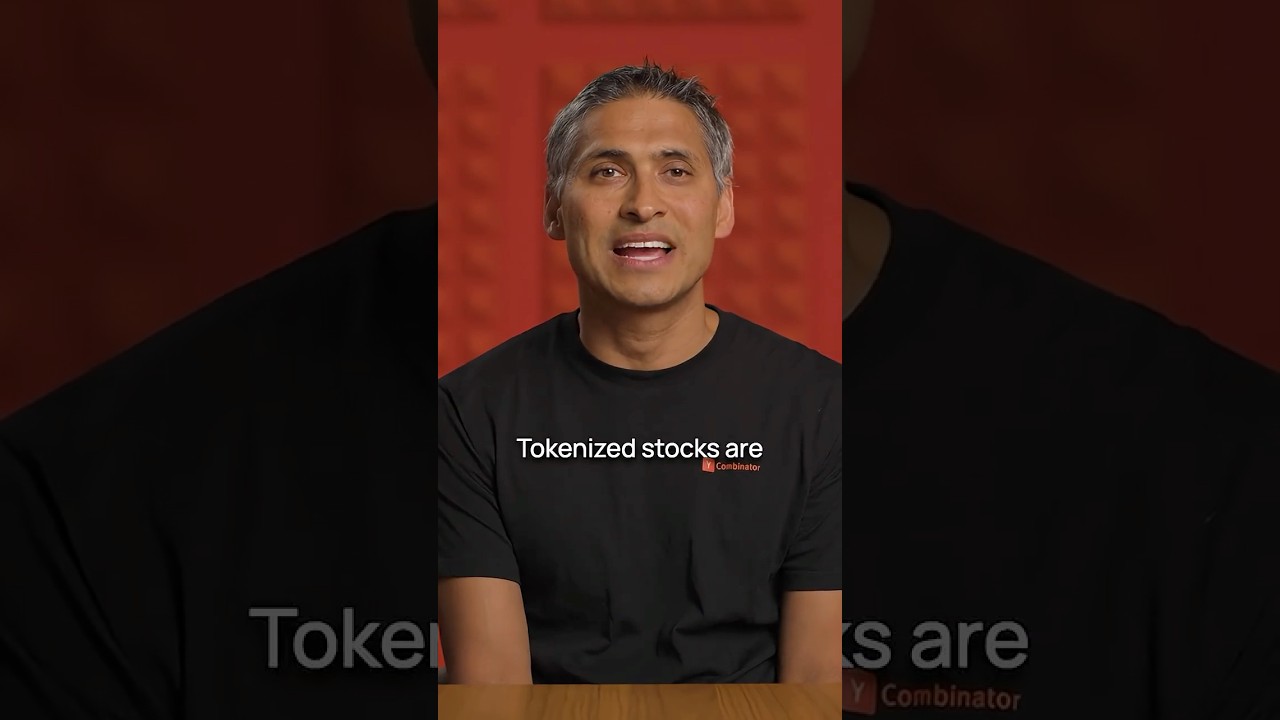
Regulatory clarity is finally here. Stablecoins are being adopted by every major financial institution. Tokenized stocks are transforming trading…
Regulatory clarity is finally here. Stablecoins are being adopted by every major financial institution. Tokenized stocks are transforming trading. Projects like Hyperliquid, with a tiny team, are making stock exchanges squeamish about their edge, and it feels inevitable that agents are going to use crypto networks as financial rails.
Platform conservatism — the conventional engineering wisdom to build on stable, proven infrastructure — gets stress-tested too. Hyperliquid, built by a tiny team, is making incumbent stock exchanges nervous about their competitive position. The conservative reading of “crypto rails are volatile, avoid them” conflates the volatility of the price with the readiness of the infrastructure. The rails are maturing; the price just hasn’t followed yet.
The oldest failure mode in technology investing also bends here: timing the category by following the adoption curve. Standard diffusion theory suggests entering when leading-edge adoption is proven. YC’s implicit claim is that the leading-edge firms — Deel, Gusto, Stripe alumni, Coinbase — have already proven the rails. The adoption curve is being climbed right now, silently, by fintechs that don’t identify as crypto companies at all. By the time sentiment recovers, the builders who treated the bear market as a starting gun will have a structural lead.
5 / 7
IV · The New
New entries for the latticework.
Two new models earn their place most clearly. The first is the Invisible Infrastructure Thesis: the technology you can’t see is the technology that has won. YC’s claim that “most will probably never even know” about crypto rails is not a weak prediction — it is the definition of infrastructure success. TCP/IP won when HTTP disappeared below the application layer. The database won when SQL became something developers didn’t have to think about. The prediction here is that crypto rails follow the same arc: the companies built on them won’t advertise it, and their users won’t notice.
Eventually, we expect every YC startup to use crypto rails… but most will probably never even know about it…
We’ve invested in more than 100 crypto startups, but we expect that number to go up a lot. Eventually, we expect every YC startup to use crypto rails, from capital raising to payments, but most will probably never even know about it. Here’s why we’re bullish.
The second is the Bear Market Selection Effect formalised: markets that can be corrupted by easy money will be corrupted in proportion to how easy the money is. Bull markets maximise corruption pressure; bear markets remove it. This is not a moral claim — it is structural. The effect is strongest in domains with low switching costs and programmable yield, which describes crypto exactly. Implication: a brutal bear market simultaneously produces the domain’s most durable building teams.
Agentic Commerce names a genuinely novel model. AI agents transacting programmatically need to pay each other without human approval loops. A traditional payment API assumes a human account holder; a stablecoin on a public blockchain assumes nothing except a valid key. The convergence of increasingly autonomous AI systems and permissionless financial infrastructure is not coincidence — it is structural fit. Add to the latticework: software agents require programmable money, and programmable money exists on crypto rails. Finally, the Adversarial Yield Signal: when criminals offering unsustainable yields depart a market, the correct read is sanitation, not collapse. Most participants interpret bear-market departures as evidence the opportunity is gone; the model inverts this — clean markets attract durable builders.
6 / 7
V · The Field Card
When to reach for which.
VI · Coda
Prices are really decoupled from reality. Bear markets let the real projects build and thrive. Y Combinator, July 2026
The latticework after this video is heavier on selection models and lighter on price-as-signal models. The most durable lesson is probably the simplest: in domains where prices decouple from fundamentals, sentiment is the wrong compass. The compass that works is structural — what does this environment select for? For crypto infrastructure, in July 2026, the answer is builders.